
Key takeaways
- Coach from the calls that show the gap, not from a random sample.
- One specific behavior per session beats a long list of feedback.
- Write the note in the agent's words and agree the next step together.
- Measure the same behavior on later calls to see if coaching landed.
What good call center agent coaching looks like
Call center agent coaching works when it is specific, frequent and tied to real conversations. An agent should leave a session knowing exactly one thing to do differently on the next call, why it matters, and how you will both know it worked.
That sounds obvious, but many coaching programs drift into something else. Sessions become score reviews. Feedback becomes a list of ten small things. Or the calls being discussed are weeks old and nobody remembers the context.
Good coaching is closer to sports practice than to an appraisal. You watch the play, pick one move, practice it and watch again. The rest of this guide is about making that loop work in a busy support desk or sales floor.
Why random call sampling makes coaching harder
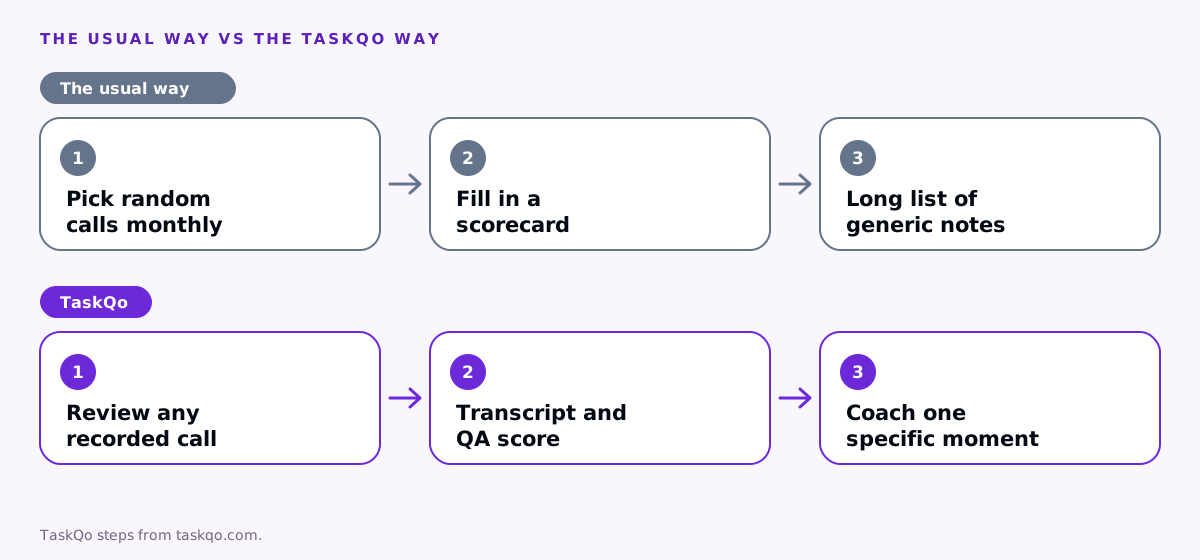
The usual approach is that a QA analyst or team lead listens to a few calls per agent per month, fills in a scorecard and passes it on. The problem is that a random handful of calls rarely shows the moment that matters.
If an agent struggles with price objections, but only a small share of their calls include one, a random sample may miss it completely. Meanwhile, the coaching session ends up discussing greetings and hold etiquette, which were fine.
A better approach is to choose calls on purpose. Look for the calls that did not convert, the calls with a complaint, the longest calls, or the calls where the customer sounded frustrated. Those are the ones with something to teach.
How to pick the calls worth coaching
Start from the outcome you care about and work back to the calls. A few useful filters:
- Calls that did not convert on a sales queue, especially ones that got far into the conversation.
- Calls with an escalation or repeat contact on a support queue, where the issue was not resolved the first time.
- Calls with low customer sentiment, where the tone shifted partway through.
- Unusually long or short calls compared with the queue norm.
- One great call, so the session can start with what the agent already does well.
Two or three well chosen calls are enough for a session. Read or listen to them before the meeting and mark the exact moment you want to talk about. A transcript helps a lot here, because you can point to the line instead of describing it from memory.
Running the session: one behavior at a time
Keep the session short and structured. A simple shape that works for most teams:
- Start with something that went well. Play or read a good moment and say why it worked.
- Look at one moment together. For example, a discount offered before the customer explained the real objection.
- Ask before you tell. What was the customer worried about there? Agents often spot the gap themselves.
- Agree one behavior. Such as: acknowledge the price concern, then ask what budget was approved, before offering anything.
- Practice it. A quick role play makes the new line feel natural.
Resist the urge to cover everything. An agent who works on one behavior for two weeks will usually improve more than one who receives a page of notes.
Coaching notes that people actually use
The note is what carries the coaching into the next shift. Write it so the agent could pick it up cold and know what to do.
- Name the call and the moment. Date, customer type, and the line in the transcript.
- Describe the behavior, not the person. "The discount came before the objection was heard" rather than "you give in too easily".
- Give the alternative in plain words. A sentence the agent can actually say.
- Set the check. When you will look again and what you will look for.
Share the note with the agent, not only with their manager. When people can see their own coaching history, the sessions feel like support rather than a file being built against them.
Follow-up: how to tell whether coaching worked
Coaching without follow-up is just a conversation. After the agreed period, pick a fresh set of calls where the same situation came up and check whether the new behavior shows.
Compare like with like. If the session was about price objections, look at calls with price objections, not the agent's overall score. Track the specific QA criteria you coached on, such as issue resolution or communication, across the following weeks.
If the behavior has stuck, say so and pick the next one. If it has not, ask why. Sometimes the script, the offer or the queue setup is the real problem, and no amount of coaching will fix it. That is useful to know too, and it is worth sharing with whoever owns the process. For more on scoring calls, see our guide to call center quality assurance.
Common coaching mistakes to avoid
Even experienced team leads fall into a few traps. Watching for them keeps coaching useful for the agent and worth the time it takes.
- Coaching only low performers. Strong agents improve with coaching too, and their good calls make the best examples for everyone else.
- Turning the session into a score review. If the conversation is mostly about a number, the agent will defend the number instead of looking at the call.
- Waiting too long. A call from last month is hard to discuss. Coach on calls from the last few days whenever you can.
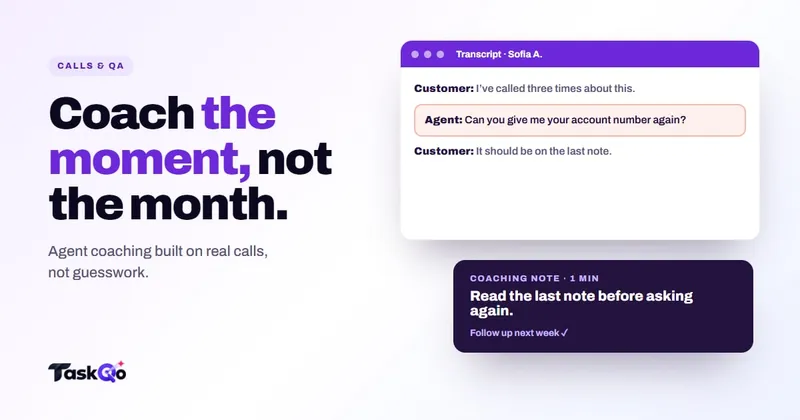
- Skipping the agent's view. The agent may know something the recording does not show, such as a system that froze or a customer who had called three times before.
- Changing the target every week. If the focus moves from greetings to holds to closing in three sessions, nothing sticks.
- Keeping notes private. Coaching notes that only managers can see feel like a file. Shared notes feel like a plan.
A useful self-check after each session: could the agent tell a colleague, in one sentence, what they are working on and why? If not, the session tried to do too much.
It also helps to coach the coaches. Have team leads sit in on each other's sessions now and then, and compare how they pick calls and phrase notes. Consistency between leads matters, because agents notice quickly when one team is coached on different standards from another.
How TaskQo supports agent coaching
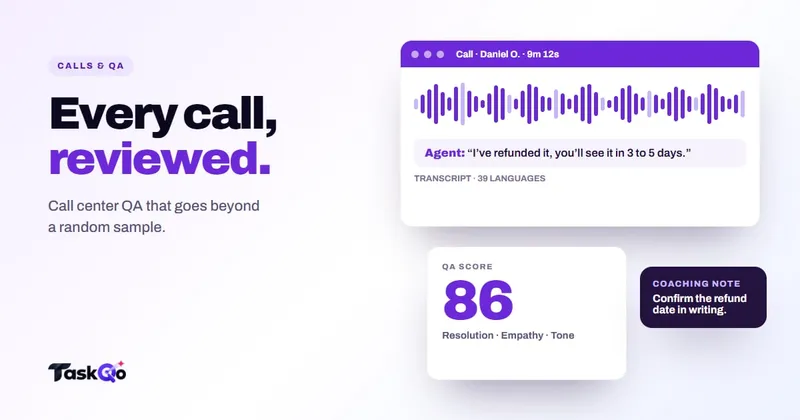
When call review is enabled, TaskQo records supported calls and meetings during shifts, with both sides where the computer's sound can be captured. Open any recording and, with one click, get a speaker-labelled transcript in 39 languages, a QA score for communication, issue resolution and professionalism, the customer's reaction, and coaching notes managers can act on.
Because you can review any recorded call rather than a random sample, it is easier to find the conversations that are not converting and spend coaching time where it is needed. A coaching note can point to the exact line, for example a discount offered before the objection was heard, with a suggested alternative.
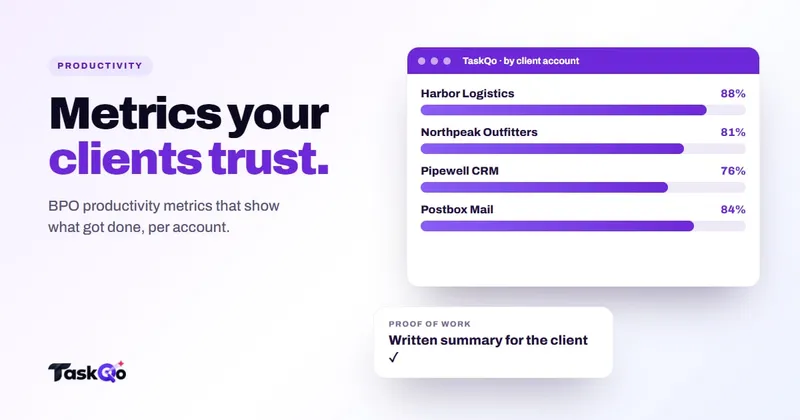
Managers can also ask the TaskQo assistant questions like which calls need coaching today? and get answers from the team's data. Reports show call quality by person, department and client account, so you can see whether coached behaviors hold over time.
See recorded calls, transcripts and QA scores in the live demo, or join the waitlist for early access.
Comparing tools: TaskQo vs Kickidler (KeepActive): an honest comparison · TaskQo vs Time Doctor: which is better for BPOs and call centers?.
FAQ
How often should call center agents be coached?
Short, regular sessions work better than rare long ones. Many teams aim for a brief session every week or two, with follow-up on the behavior agreed last time.
What should a coaching session for a call center agent include?
A good moment to reinforce, one specific moment to improve, an agreed behavior in plain words, a short practice and a date to check again.
What is the difference between QA and coaching?
QA measures calls against a scorecard. Coaching uses what QA finds to help an agent change a specific behavior, then checks whether it changed.
How do you measure if agent coaching is working?
Check the same situation on later calls and track the specific criteria you coached on, rather than the overall score.
About this guide: written by the TaskQo team. We make TaskQo, a tool that analyzes work inside scheduled shifts, so we mention it where it fits. The advice here works with any tool. Rules on workplace monitoring differ by country and state, so check local law before you change a policy. Questions or corrections: admin@taskqo.com.